
CRAFTED WITH INTENTION
At KLA TESSE, we believe the things we bring into our homes should be made with care, intention, and respect for the people who create them. Every collection reflects a slower approach to craftsmanship—one that values quality over quantity, heritage over convenience, and timeless design over passing trends.
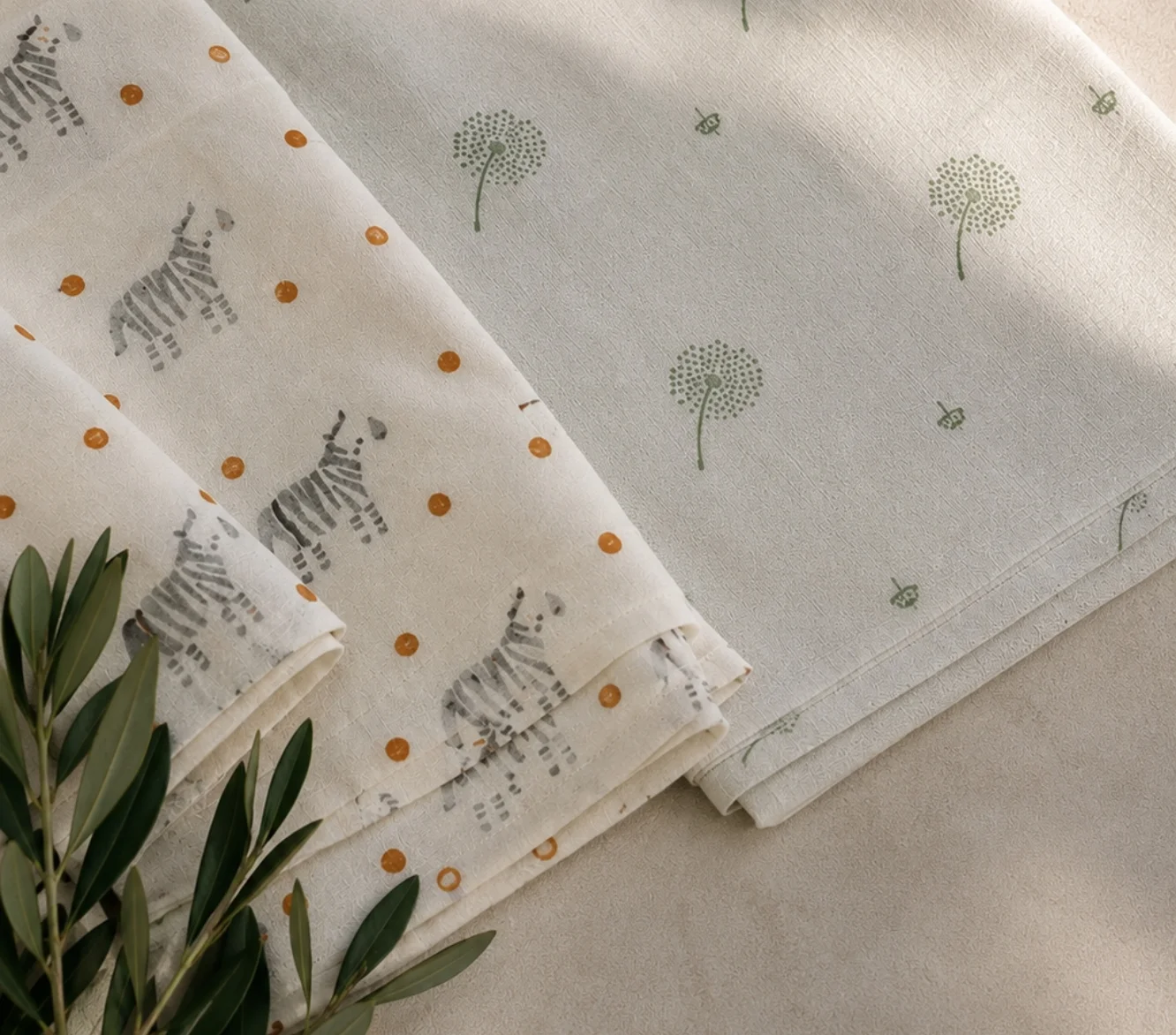
LIMITED PIECES-ENSURING SUSTAINABILITY
Made to Last
We design for the long term. Nothing here is chasing a season — every piece is meant to earn its place in your home and stay there, coming back into use again and again.
We deliberately keep production runs small. It’s a slower way of working, but it means every batch is made with intention rather than volume in mind, and stock never outpaces what’s genuinely needed. Our team travels to Jaipur to work alongside the artisans directly, present throughout the printing process rather than sourcing from a distance.
Cotton is sourced locally, selected specifically for how well it holds up to hand block printing and everyday wear. We favour natural fibres precisely because they’re built to withstand years of use and washing — and we send simple care guidance with every piece so it lasts as it should, with as light a footprint as possible.
Even the cutting process is considered: fabric is cut to minimise waste, and what’s left over is turned into the drawstring bags each piece is packaged in.
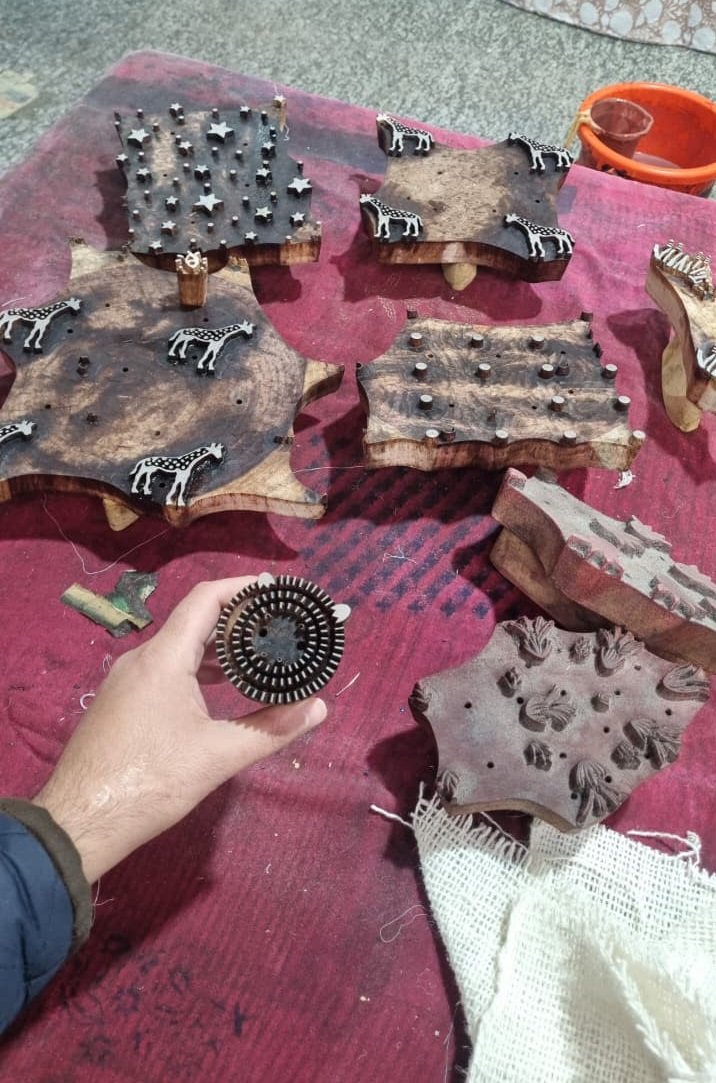
BLOCK PRINTING
A Craft Rooted in History
Hand block printing traces its roots back over 4,000 years, with some of the earliest evidence found in the Indus Valley Civilisation. The craft as we know it today flourished in Rajasthan, particularly around Jaipur, Bagru, and Sanganer — regions whose mineral-rich water and natural clay deposits made them ideally suited to the dyeing process. Generations of families, many belonging to the Chhipa community, have passed the technique down as a livelihood and an inheritance, refining it into the intricate, layered art form it is today.
Each pattern begins with a hand-carved wooden block, traditionally cut from seasoned teak or sheesham wood — a process that can itself take days for a single intricate design. Multiple blocks are often used for a single print, one for each colour, requiring exact alignment as the artisan presses block after block by hand across the length of fabric. Natural dyes, drawn from indigo, madder root, turmeric, and iron rust, were traditionally used to achieve the earthy, storied palette the craft is known for.
Block printing survived the arrival of industrial textile production precisely because it offers what machines cannot: the subtle irregularity of the human hand, and a connection between maker and cloth that no shortcut can replicate. It’s precisely because this skill can’t be shortcut that we work the way we do: slowly, in small runs, standing behind every piece that leaves our hands.
MADE BY HAND
Every Piece Tells a Story
Every print in the collection starts as a carved wooden block — often several per design, each one holding a single colour or layer of the pattern. An artisan dips the block into dye and presses it by hand, one repeat at a time, working down the length of cotton — muslin, gauze, taj cotton — realigning by eye with each press to keep the pattern true.
It’s a slow, physical process, and it shows: pressure varies slightly from print to print, dye pools a touch differently here and there, and the result is a surface that carries the faint warmth of human touch. No two pieces are ever exactly alike. We consider that a feature, not a flaw — proof that a person, not a machine, made what you’re holding.
READY TO EXPLORE OUR PRODUCTS
Explore our collections of hand block printed pieces, each thoughtfully created with natural fibres, timeless designs, and artisanal craftsmanship.


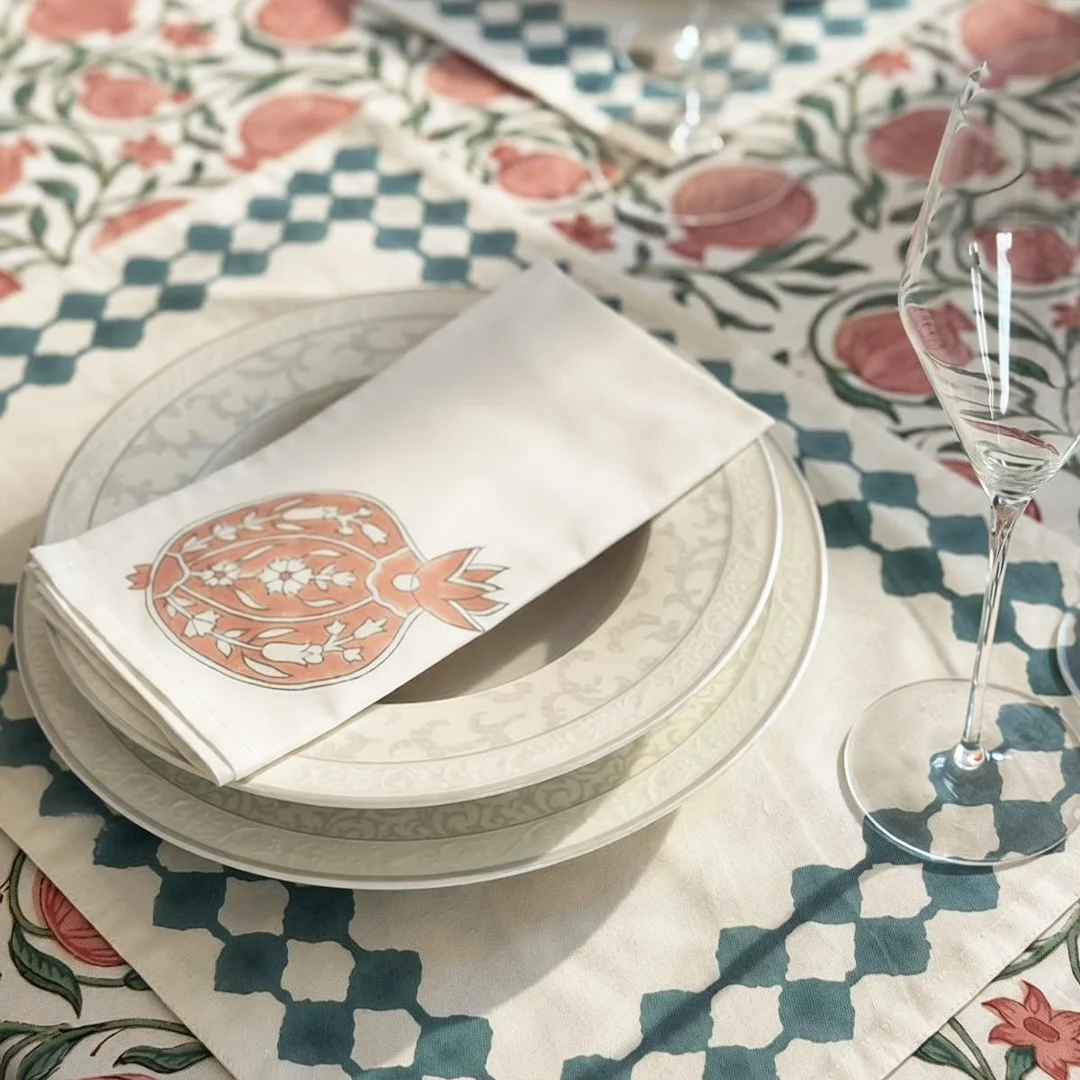
By Hand
Every piece is hand block printed and carefully finished by skilled artisans, preserving the subtle variations that make each one truly unique.
Read More
Block Printing
An ancient craft passed down through generations, hand block printing transforms carved wooden blocks and natural dyes into timeless textile designs.
Read More
Limited Edition
Produced in small batches to reduce waste and encourage mindful craftsmanship, each collection is made to be treasured for years to come.
Read More
By Hand
Every piece is hand block printed and carefully finished by skilled artisans, preserving the subtle variations that make each one truly unique.
Read More
Block Printing
An ancient craft passed down through generations, hand block printing transforms carved wooden blocks and natural dyes into timeless textile designs.
Read More
Limited Edition
Produced in small batches to reduce waste and encourage mindful craftsmanship, each collection is made to be treasured for years to come.
Read More